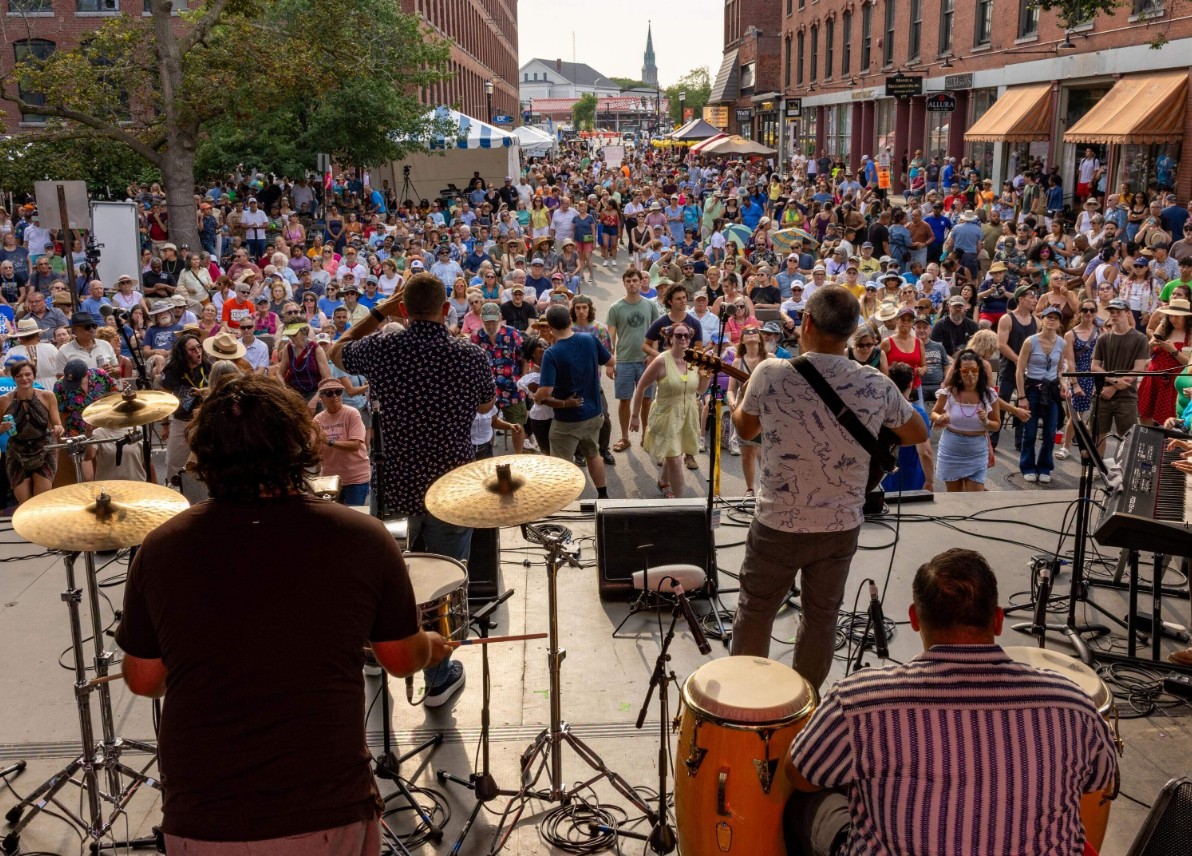
The Lowell Folk Festival is one of the Merrimack Valley’s biggest summer weekends, but enjoying it usually takes more planning than simply arriving downtown and following the music.
The event spreads across multiple stages and activity areas in downtown Lowell. Visitors may move between Boarding House Park, St. Anne’s Churchyard, the Dance Pavilion area on Arcand Drive, Market Street, family activities, food vendors, crafts, and other festival features. A simple plan for arrival, parking, walking, weather, food, and must-see performances can make the day much easier.
For the most current details, start with the festival’s official 2026 performance schedule and directions and parking information before leaving home.
When Is the 2026 Lowell Folk Festival?
The 2026 Lowell Folk Festival takes place from Friday, July 24, through Sunday, July 26, in downtown Lowell, Massachusetts.
Friday begins with the traditional Parade of Flags at 6:15 p.m., followed by evening performances. Saturday offers the longest day of programming, with music and activities beginning around noon and continuing into the evening. Sunday begins at noon and wraps up by early evening.
A practical way to choose your day is:
- Friday evening: Good for visitors who want the opening parade, a shorter visit, and evening performances.
- Saturday: Best for visitors who want the widest selection of performances, food, crafts, and activity time.
- Sunday: A useful option for families, first-time visitors, or anyone who prefers a shorter daytime schedule.
The festival includes more than 60 scheduled performances in 2026, so it is difficult to see everything. Choose two or three priority performances, then leave enough time to explore food, crafts, and the downtown setting between them.
Is the Lowell Folk Festival Free?
Yes. Festival performances and activities are free to attend.
Visitors should still budget for:
- Parking or public transportation costs
- Food and drinks
- Festival merchandise
- Purchases from artists or the arts market
- Optional donations that help support the festival
In simple terms, admission is free, but bringing a realistic spending budget makes the day easier. Families may also want to decide in advance how much they plan to spend on food, snacks, and souvenirs.
What Should Visitors Know About Parking?
Parking is available throughout Lowell, but downtown streets and garages become busy during the festival. The official 2026 parking information lists special event garage rates ranging from $15 to $20, along with selected $5 event-rate on-street parking zones.
For visitors staying more than two hours, a garage is usually more practical than a standard metered space. The official parking page identifies the HCID Garage as a convenient option from the Lowell Connector and lists a limited three-day pass for visitors attending throughout the weekend.
A good parking plan is to:
- Select a garage before leaving home.
- Save the garage address in your phone.
- Arrive earlier than your first must-see performance.
- Expect to walk several blocks to festival areas.
- Avoid depending on a last-minute street space near a stage.
Visitors using disability parking should review the official notes for the Joseph Downes and Leo Roy garages, where first-floor accessible spaces are available on a first-come, first-served basis.
Are There Street Closures in Downtown Lowell?
Yes. Festival preparation and event operations require several downtown street closures.
Arcand Drive begins closing before the festival, and additional closures take effect throughout Friday on French Street, Market Street, Merrimack Street, Central Street, John Street, Kirk Street, Middle Street, Palmer Street, Shattuck Street, Paige Street, and nearby areas.
The local takeaway is simple: do not assume your normal route through downtown will remain open. Review the official street closure and parking updates, allow extra driving time, and follow event signs when approaching the festival.
The Roy Garage on Market Street and Joseph Downes Garage on John Street are expected to remain accessible by car during the weekend, but traffic patterns may still be different from a normal downtown day.
Can Visitors Use Public Transportation?
Yes. Public transportation can reduce the stress of finding parking near the festival footprint.
For 2026, the Lowell Regional Transit Authority is scheduled to provide a free shuttle between the Kennedy Center/Gallagher Terminal and the festival area:
- Friday, July 24: Noon to 10:30 p.m.
- Saturday, July 25: 11:00 a.m. to 10:30 p.m.
- Sunday, July 26: 11:00 a.m. to 7:00 p.m.
Parking is available at the Gallagher Terminal garage at 115 Thorndike Street, with hourly parking fees applying.
Visitors traveling by commuter rail should confirm the current MBTA Lowell Line schedule before leaving. Train and shuttle schedules can change, so the best course of action is to check the official transportation information on the morning of your visit rather than relying only on an earlier screenshot.
How Should You Use the Performance Schedule?
The most important planning mistake to avoid is trying to follow every performance.
The festival features different traditions, instruments, dance styles, and regional music across several venues. The 2026 lineup includes Puerto Rican cuatro, Cabo Verdean funaná and batuque, zydeco, Delta blues, Tuvan throat singing, Haitian dance, Sicilian traditional music, bluegrass, Wampanoag social songs and dance, Peruvian Andean scissors dance, and other traditions.
A better strategy is:
- Pick one performance you do not want to miss.
- Pick one nearby performance as a backup.
- Leave open time for food, crafts, family activities, and walking.
- Screenshot the schedule, but check the live page again if weather or venue conditions change.
- Decide whether your group prefers seated listening, dancing, cultural demonstrations, or a mix.
Review the official 2026 artist lineup before the weekend if your group wants to discover unfamiliar performers in advance.
What Food Is Available at the Festival?
Food is a major part of the Lowell Folk Festival experience.
The festival’s Food From Around the World program features nonprofit organizations, many of them local, preparing dishes connected to their cultural heritage. The proceeds from those food sales support the participating organizations and their missions.
For visitors, this means the food area is not simply a collection of standard festival vendors. It is part of the cultural experience and a direct way to support local churches, schools, nonprofits, and community groups.
A practical food plan is to:
- Review available menus before arriving when updated menus are posted.
- Eat before the busiest dinner period if your group includes young children.
- Carry a payment method accepted by vendors and parking facilities.
- Share a few dishes if your group wants to sample more cuisines.
- Ask about ingredients directly if anyone has allergies or dietary restrictions.
- Bring water, especially during a hot afternoon.
Is the Festival Good for Families With Children?
Yes. The festival is designed for visitors of different ages, and the Discovery Lowell Playspace gives families a dedicated activity area along Merrimack Street.
The playspace is expected to include hands-on science and engineering activities, games, community activity tables, youth performances, and a quieter area where families can take a break from crowds and stimulation.
For families, this means you do not have to keep children seated through a full day of concerts. A flexible plan can combine:
- One or two music performances
- A meal or snack break
- The family activity area
- A short craft demonstration
- A quieter rest period
Parents may also want to bring sunscreen, hats, refillable water bottles, wipes, a light blanket, hearing protection for young children, and a clear meeting plan in case anyone gets separated.
What Traditional Crafts Can Visitors See?
The festival’s craft programming gives visitors a closer look at how cultural knowledge is passed between generations.
The 2026 Folk Craft Area focuses on apprenticeships and traditional knowledge. Demonstrations include Indigenous traditions, hide preparation, wampum, drum and paddle making, Western bootmaking, New England ship-wheel construction, Chinese papercutting, Uyghur calligraphy, and other specialized practices.
Why this matters: a folk festival is not only about watching a performance. It is also an opportunity to understand the skills, stories, materials, and mentorship that keep traditions active.
For families, students, artists, and curious visitors, the craft area may be one of the most memorable parts of the weekend because it allows more direct conversation and observation than a large stage performance.
What Should You Bring?
Late July in Lowell can be hot, sunny, humid, rainy, or all of those conditions during the same weekend. The festival generally continues rain or shine, with venue changes announced when necessary.
Useful items include:
- Comfortable walking shoes
- Water or a refillable bottle
- Sunscreen
- Sunglasses and a hat
- A lightweight rain layer
- A sweater or light jacket for evening performances
- A blanket, towel, or low lawn chair
- A portable phone charger
- A screenshot of the schedule and parking location
- A small amount of backup cash
- Hearing protection for young children or noise-sensitive visitors
The official festival guidance allows low lawn chairs but asks visitors to be considerate of sightlines. Bicycles, skateboards, hoverboards, Segways, and drones are not permitted within festival grounds.
Review the official Lowell Folk Festival frequently asked questions shortly before attending because event operations and weather-related guidance can change.
Is the Lowell Folk Festival Accessible?
The festival states that its venues are wheelchair accessible.
Accessible restrooms are available at locations including the Lowell National Historical Park Visitor Center, Boott Cotton Mills Museum, and Joseph Downes Parking Garage. Sign-language interpretation is included at the Boarding House Park stage and selected additional stages.
Visitors who need a more predictable route should identify the closest garage, accessible restroom, priority stage, and rest area before arriving. Because downtown surfaces, crowds, temporary closures, and distances between venues can affect the experience, planning a shorter route may be more comfortable than trying to cover the entire festival footprint.
Should You Bring a Dog?
The festival does not completely prohibit dogs, but its official guidance notes that the busy festival environment may not be comfortable for pets.
For most visitors, leaving pets at home is the easier option. Anyone who must bring a dog should make sure the dog is licensed, leashed, comfortable in active crowds, cleaned up after, and given regular access to water.
Service animals should be handled according to applicable access rules, but visitors may still benefit from planning around crowd density, heat, and walking distance.
How Can First-Time Visitors Make the Day Easier?
A first-time visitor does not need a complicated itinerary. A simple plan works well:
- Choose Friday, Saturday, or Sunday based on your group’s energy and available time.
- Select one parking garage or transit option.
- Pick two priority performances.
- Add one food stop and one craft or family activity.
- Build in a shaded rest break.
- Save the return route to your car or transit stop.
- Check the official schedule, weather, and transportation updates before leaving.
The most important thing to know is that the Lowell Folk Festival is spread across downtown. Comfortable walking, flexible timing, and realistic expectations usually create a better experience than trying to see every stage.
Why Does the Lowell Folk Festival Matter to the Merrimack Valley?
The festival gives residents and visitors a concentrated look at Lowell’s cultural identity, public spaces, downtown energy, history, and community organizations.
For longtime residents, it is an annual tradition. For newer residents, relocation buyers, and people exploring Northern Massachusetts, it can also be a useful way to experience how Lowell feels during a major community weekend.
La Casa Group’s community resource library includes additional local lifestyle content for people exploring Southern New Hampshire and the Merrimack Valley. Readers planning more regional summer activities may also find the NH and MA summer bucket list useful.
In summary, the Lowell Folk Festival is easiest to enjoy when visitors plan the logistics first, then leave room for discovery. Review the schedule, choose a travel plan, prepare for the weather, and let the music, food, crafts, and downtown atmosphere shape the rest of the day.
La Casa Group’s Local Perspective
The Lowell Folk Festival shows why community research matters when people compare places to live. A home search is not only about bedroom count, price, or square footage. It is also about access to events, public transportation, walkable areas, cultural activity, local food, parks, downtown energy, and the type of community experience a household wants.
Lowell offers a different lifestyle from smaller Merrimack Valley towns or quieter Southern New Hampshire communities. A large downtown festival can help visitors see that difference in person. Some people will enjoy the activity, variety, and historic urban setting. Others may realize they prefer a more suburban or small-town environment. Both reactions are useful when comparing communities.
For readers considering a move, La Casa Group’s guide on whether Lowell buyers are getting more options this summer provides a separate real estate perspective on the city and current buyer planning.
“Community events help people understand a place in a way that listing photos cannot. They show how the streets, public spaces, transportation, local organizations, and residents come together.”
A good next step is to enjoy the festival as a community experience first. If the visit also raises questions about living in Lowell, nearby Merrimack Valley communities, or Southern New Hampshire, La Casa Group can help you compare lifestyle, commute, property type, budget, and local market conditions without pressure.
Frequently Asked Questions
Is the 2026 Lowell Folk Festival free?
Yes. Performances and festival activities are free to attend. Visitors should still plan for parking, food, merchandise, and optional donations.
What are the 2026 Lowell Folk Festival dates?
The festival runs Friday, July 24, through Sunday, July 26, 2026. Friday begins with the Parade of Flags at 6:15 p.m., while Saturday and Sunday programming begins around noon.
Where should I park for the Lowell Folk Festival?
The festival lists several downtown garages with special event rates. Visitors staying more than two hours may find a garage easier than metered parking. Review the official directions page before leaving because rates, access routes, and street closures can affect the best option.
Is the Lowell Folk Festival good for children?
Yes. Families can combine music with the Discovery Lowell Playspace, craft demonstrations, food, youth performances, and rest breaks. A shorter Sunday visit may be easier for some families, while Saturday offers the largest selection of activities.
What should I bring to the Lowell Folk Festival?
Bring comfortable shoes, water, sunscreen, a hat, a light rain layer, a portable charger, and a blanket or low chair. Consider hearing protection for young children and a clear meeting plan for groups.
Is the festival accessible for wheelchair users?
The festival states that its venues are wheelchair accessible and identifies accessible restrooms and disability parking options. Visitors should review the official accessibility and parking details before attending and plan a manageable route between priority locations.
Contact La Casa Group
Cinthia Ulloa
La Casa Group
Brokered by KW Metropolitan
Office Phone: 603-232-8282
Mobile Phone: 603-945-2337
Website: https://www.lacasagroup.com
Office Address: 168 South River Road, Bedford, NH 03110
Se habla español. La Casa Group can assist Spanish-speaking buyers and sellers.